I was just two months away from race day, my mileage climbing, my determination high—and then my Achilles reminded me who’s really in charge. Here’s how I decided to trade one marathon for many more years of healthy running.
The Decision I Didn’t Want to Make
I had been working hard to come back from Achilles tendinitis. I made it through a 12-mile long run, but the soreness and tightness afterward told me something wasn’t right. With the marathon looming, I had to ask myself the hard questions: Do I want to run 26.2 miles like this? What will it mean for my long-term goals?
The answer became clear: one marathon wasn’t worth risking years of running ahead.
Listening to the Warning Signs
Pain during a run can sometimes be manageable, but pain and stiffness the next day are warning signals. After my long runs, I noticed my Achilles was tighter and sorer the following morning. That was my body telling me I was pushing too hard, too soon.
My New Focus: Healing First
Instead of piling on the miles, I’ve shifted to running just three times a week, no more than two miles at a time. On other days, I walk or bike to keep moving without overloading my tendon. The difference already shows—my stiffness is decreasing, and I’m walking more easily.
Building Strength and Stability
Running less gives me more room to build the strength I need:
Heavy strength training to support tendons and muscles.
Barefoot lifting at home to strengthen my feet.
Balance and mobility work to stabilize my ankles.
Massage and mobility exercises to help my Achilles remodel and heal properly.
It’s not always as fun as just running, but I know this work will pay off when I return to full training.
The Mental Side of Rest
Cutting mileage is hard. I’m used to running for hours each week, and now I’m running just 15 minutes at a time. This week felt okay because my body clearly needed the break—but I know the mental challenge will come. My hope is that focusing on strength and recovery will give me the mindset I need to get through it.
Looking Ahead
This isn’t the end of my marathon journey—it’s just a pause. By choosing to heal now, I’m giving myself the chance to run stronger and healthier for years to come. And when I finally line up for my next marathon, I want it to be with confidence in my body, not worry over my Achilles.
I was deep into training for a spring marathon when a freezing long run led to proximal hamstring tendinopathy (PHT). I didn’t make it to the starting line. Instead, I spent months—and thousands of dollars—on physical therapy.
Eventually, I was pain-free and training again for a fall marathon. Things were looking up… until Achilles tendinitis hit.
A High Followed by a Low
I had a strong 12-mile run last Saturday. It finished fast with plenty of hills, and I felt great powering up each climb. Sunday was a rest day, but Monday I still felt a little off. I went out for an easy run—still hilly—and noticed some tightness in my right lower calf. Nothing major, or so I thought.
Later that day, I felt sharp pain in my right ankle when I touched it. I rubbed and stretched it but didn’t take it seriously. The next day I tried a short, easy run and the pain hit immediately. I stopped and walked. It still hurt.
A quick internet search and a positive “pinch test” made it clear—it was my Achilles tendon. Worse yet, the swelling was visible.
My heart sank. Not another tendon injury. Not my Achilles.
The Panic, and the Plan
Achilles injuries are notoriously tough. I’d never struggled with mine before, but I know runners who have—and how long it can take to recover. But this time, I reminded myself: I’ve been here before. I’ve learned from the PHT rehab. I know what to do—and what not to do.
Tendons don’t heal like muscles. Their limited blood supply means slow recovery. Even when they “heal,” the tissue isn’t quite the same as before. But it can regain full function.
Think of it like a scar on your skin. It still works, but it’s different.
Early Recovery: Rest, but Not Too Much
In the early phase, inflammation floods the injury site. Some inflammation is necessary—but too much can damage surrounding tissue. That’s why icing several times a day can help early on.
I took three full days off from running. I iced, ate an anti-inflammatory diet, and prioritized sleep—the body’s best repair window.
But I didn’t stay totally inactive. I did gentle walking and light calf raises, stopping at the first hint of pain. This is key: Tendons heal best with some load. Total rest can actually slow healing.
It’s a delicate balance. Too much load, and you worsen the injury. Too little, and you lose ground.
Testing the Waters
After three days, my swelling had gone down and I was pain-free on long walks. I went to a track—flat and soft—and warmed up with a half-mile walk, mobility, and gentle stretches (overstretching a healing tendon is a no-no).
Then I ran two miles.
I had slight pain at the start (2/10), but it faded quickly and didn’t return. Afterward, pain briefly spiked to 3/10 while walking but dropped to zero within a few steps. A great sign.
Tendons often react 24 hours later, so I waited. No increase in pain!
Progress and Patience
The next day I ran four miles on flat roads. I warmed up the same way and had zero pain for most of the run—just some mild discomfort (2/10) in the final mile. That’s considered acceptable for tendon rehab. It’s hard, though, to run with any pain if you’re used to running pain-free.
When I first rehabbed my PHT, I had to rewire my brain to accept running with a 3–4/10 pain level. It’s not easy, but it worked. I built up slowly, even while running through some discomfort—and eventually got back to pain-free running.
This time, I’m doing the same. I finished my run, cooled down, stretched, iced—and now I wait. Another 24-hour test. I can’t plan my week out yet. I have to take it day by day.
Final Thoughts
Tendon injuries test more than your body—they test your patience, discipline, and mindset. But they also teach you resilience, and remind you that healing is not linear.
Yesterday, I headed out for a long run that doubled as a VO2 max workout. I’d slept in a little, so by the time I got moving, it was hotter and more humid than I’d hoped for.
This was my second tough workout of the week, and I wanted to push myself — but not overreach. The plan was simple but demanding: a warm-up, then 8 sets of 2-minute intervals at 5K pace, each followed by a 2-minute jog recovery.
Heat, Humidity, and Hard Lessons
When the temperatures climb and the humidity makes cooling difficult, it’s easy to underestimate how quickly things can go south. I’ve been learning how to manage this better — mostly by making mistakes.
There have been plenty of workouts I’ve had to cut short, or skip entirely, because I misjudged how hard the heat would hit me.
Yesterday, the first 4 intervals went well. I was hitting my paces, but I made a smart adjustment: instead of jogging between sets 4 and 5, I walked and sipped from the 10 oz of electrolyte drink I’d brought. It wasn’t cold, but it helped.
Understanding the Body in Heat
When it’s humid, your body works overtime trying to cool you. Sweat doesn’t evaporate efficiently, so your heart rate climbs as your body pushes more blood to the skin’s surface to cool off. Even on hot days, your core temp is usually higher than the air — unless you’re running in triple-digit heat.
I have a high sweat rate. It’s actually a sign of good fitness, but it comes with a cost — I lose a lot of fluids and electrolytes, which can hurt performance.
Knowing When to Adapt
I finished the 5th interval on pace but started to feel the strain. Around 40 seconds before each rep ended, I was already digging deep. Struggling in the final 10 seconds is one thing — but 40 seconds is a lot of pain real estate.
I had two choices: slow down or adjust the recovery. Slowing would’ve been smart and effective — just a 10–15 second drop in pace still stresses the system enough. But I’ve always struggled to back off once I’m locked into a rhythm.
In college, my coach sometimes cut my workouts short because I’d push too hard on the intervals. That was before GPS watches gave you instant pace feedback.
So I compromised: I added 30 seconds to my recoveries for sets 5 through 8. That gave me the margin I needed to stay on pace without redlining.
The Cool Down and the Cemetery
After the final rep, I walked a few minutes, finished the rest of my electrolyte drink, and began my cooldown jog.
Sometimes the cooldown feels harder than the workout. That’s when I focus on slowing down, breathing well, maintaining good form — and finding something to enjoy.
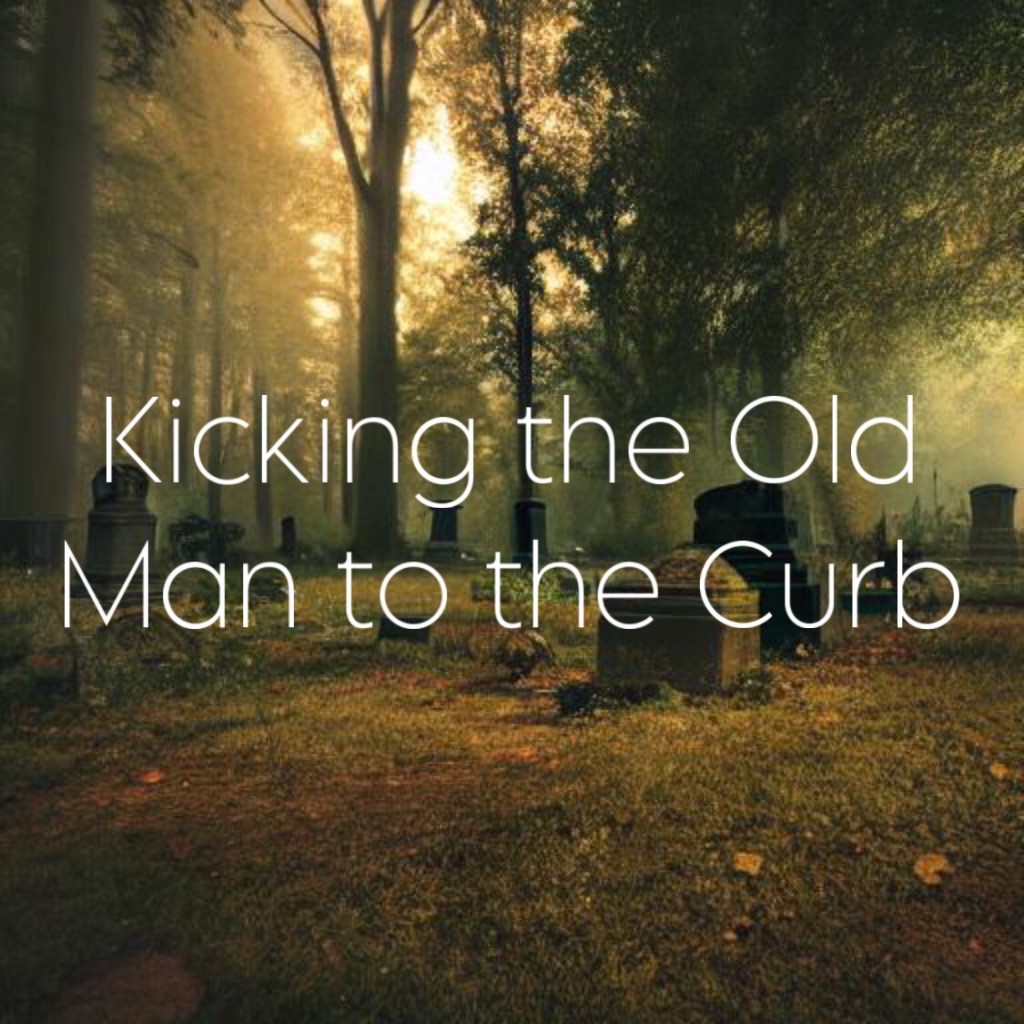
As I jogged through a cemetery, I passed an elderly man walking with a cane. He was moving slowly, carefully — but he was moving. I wanted to say something encouraging, but I wasn’t sure how it would come across. So I simply smiled and said, “Good morning.”
Reflection on Movement and Mortality
As I ran past the rows of gravestones, I thought about him. About all of us. Maybe he was thinking the same thing: this is where we’re all headed. First old age, then eventually, the end.
We don’t like to think about death — not in our culture, anyway. Our ancestors lived with it more directly. Today, we’re shielded from it, which makes it harder to accept.
But the truth remains: we can’t outrun aging. We can’t outrun death.
Still, I realized — by pushing myself the way I do, I’m at least kicking the old man down the curb. Delaying the inevitable a little longer.
No one knows what their future holds. But while I have this strength, this breath, this body — I’ll keep pushing. Every effort, every hard rep, every mindful step — it’s one more act of quiet resistance.
We can’t escape our own mortality. But we can train our bodies and minds today to better face the challenges of tomorrow.
The morning of July 5th, waking up early in a campground is an experience. When my alarm went off, I wanted to close my eyes and try to get a little more sleep, but I got up instead.
Outside our camper, it was already warm—warmer than it had been the past few mornings. The campground was still and quiet. The sun lit up the remnants of the night before: toys, coolers, Fourth of July decorations scattered around every site, like snapshots of joy frozen in time. It made me smile.
But I had work to do.
Running Through Summer
I’ve never wanted to do a fall marathon because I don’t like doing the bulk of my training in the summer. I love running—but I also love summer and my family. Running all those miles often means missing out on both.
Plus, the heat has always been tough for me. I think I have a high sweat rate, and in warmer temps, I often finish my runs feeling drained, even sick. Still, I was determined to give this training cycle my best shot.
So I woke up even earlier to hydrate for my 11-miler. By the time I started running, my stomach was full of fluid—I felt it sloshing around, and I was a little nauseous. But I knew my body would thank me later.
Running with Friends Makes All the Difference
I ran the first 8 miles with one of my best friends. We’ve logged countless miles together—in high school, college, and beyond. We push each other in a good way.
There was a long hill on our way back, and if she hadn’t been there, I probably would have stopped to take a breather. Even after all that hydration, I was definitely feeling the effects of the heat.
After she finished her miles, I grabbed an electrolyte drink and guzzled 8 ounces, followed by a GU energy gel. I usually don’t take fuel unless I’m running 13+, but I’m learning that even on shorter long runs, it can help.
The last 3 miles I ran with her husband. That helped too. When I’m alone, it’s easy to get stuck in my own head and focus too much on discomfort. Having someone beside me, even just for accountability or pride, makes a difference.
Comebacks and Conviction
I finished all 11 miles. It was the longest I’ve run since January, when I was training for a spring marathon I never got to race due to proximal hamstring tendinopathy.
Was I tired? Yes. Dehydrated? For sure. But also proud. It felt good to complete a hard run and know a rest day was coming, followed by a lower-mileage week. I’ve used a “2 weeks hard, 1 week easy” structure for years—and it works for me.
“Running is my exercise true love—and I believe my body can still do it.”
Now that I’m over 40, I’ve had a few health professionals suggest I scale back—run fewer days, cross-train more, or even (gasp) switch to walking.
I know they mean well. But in the politest of terms: I don’t think so.
I like walking. I cross-train occasionally. I stretch and strength train and fuel wisely. But running is still what I love. And my body, even after injury, still shows up for it.
Why I Still Run
Completing that 11-miler, including a few legit hills, at a pace I once ran in my 20s? That’s a victory. It felt hard—but I did it.
Yes, I’m aging. We all are. But there are plenty of runners much older than I am still doing this—and doing it well. Why not me?
I talked about this with my friend’s husband during those last 3 miles. We’re trying to actually live the rest of our lives. And for me, that includes doing what I love—even when it’s hard.
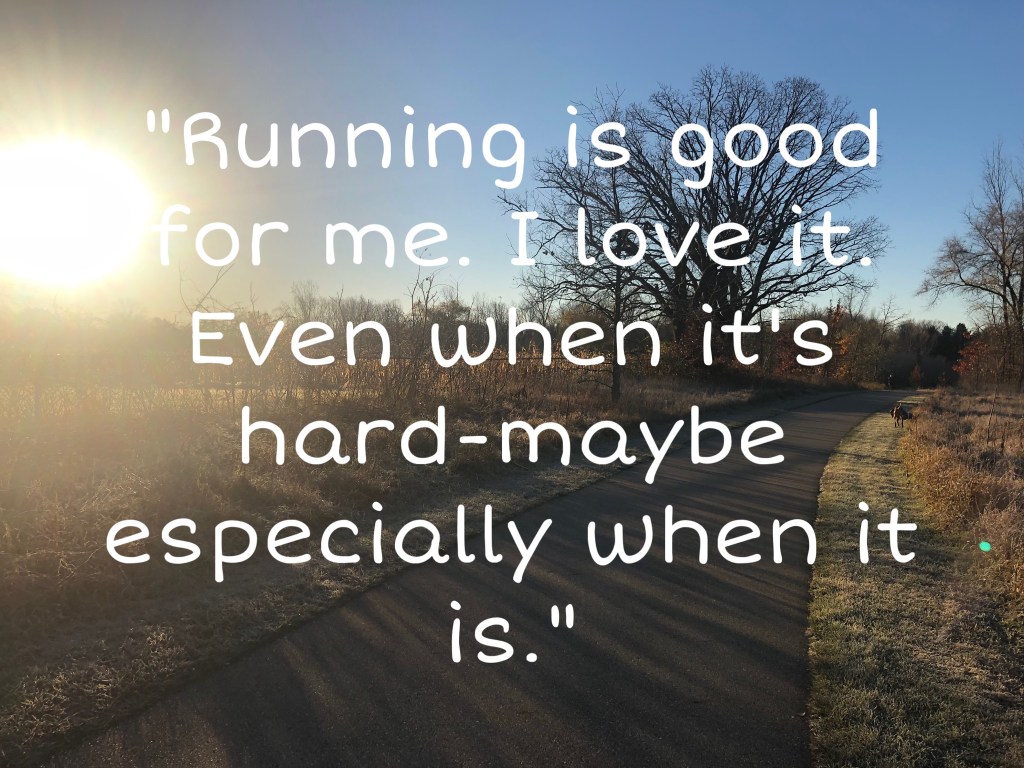
Maybe especially when it’s hard.
Later that day, I pulled out my massage gun and worked on the same hamstring I injured back in January. It felt tight but okay. I stretched. I paid attention. I took care of myself—because I want to keep doing this for a long time.
Hard Things Are Worth It
Running is hard sometimes. Parenting is hard. Life is hard. But pushing through something physically hard helps me face the other hard things with more resilience.
I’ve been seeing a lot of social media posts lately claiming that running makes you gain weight or wrecks your hormones. Every time I come across one of these statements, it really gets under my skin.
I’ve been running year-round since I was about 15 years old. That’s nearly 27 years of consistent running. It’s been a steady presence in my life through all of its ups and downs, and it’s one of the most important tools I have for becoming the best version of myself.
First of all, the claim that running makes you fat is simply incorrect. By definition, an activity that burns a significant amount of energy cannot directly cause weight gain. That said, I also understand the nuance behind this idea: burning a lot of calories doesn’t always translate to fat loss or even weight loss. I learned this firsthand while breastfeeding my three children. Despite the fact that breastfeeding burns a substantial number of calories, I actually tended to gain weight during those periods.
When we look at this from an evolutionary perspective — which I often do (and which, by the way, aligns with my Christian worldview and supports my belief in intelligent design) — it makes perfect sense. It wouldn’t be beneficial for a woman who is nourishing two people to lose excessive fat and risk starving both herself and her baby during times of scarcity. In fact, research shows that even though breastfeeding burns calories, a woman’s body is designed to protect fat stores as a survival mechanism. This gave women an evolutionary advantage, and during times of famine, women survived better than men.
When women are breastfeeding an infant, we have additional mechanisms that are working to ensure survival of both. The hormone prolactin, which is responsible for milk production, also promotes appetite and can prevent the breakdown of fat. I can remember feeling hunger like I’d never felt before when I was breastfeeding my oldest. I remember stuffing energy bars in my bathroom drawers so in the middle of the night when I was up with her, I could satisfy my extreme hunger.
Additionally, low estrogen (which can suppress ovulation, because again, you’re already providing for one infant, your body wouldn’t want another pregnancy yet) can affect fat distribution and reduce metabolism. Then there’s the fact that most new moms are not getting a lot of sleep and often experience higher stress levels, increasing cortisol which also promotes fat storage, instead of breakdown. So I often gained weight the first 6 months of breastfeeding with all of my kids!
The claim that running can make you fat, is based on the fact that intense cardio is a stressful event. As such, it can increase cortisol, which encourages fat storage instead of fat breakdown, but this claim over simplifies a very complex process.
Yes, high intensity cardio exercise can temporarily increase cortisol levels. So again, we turn to evolutionary biology. The thing is that exercise is one activity that humans are highly adaptive to. And we are incredibly well suited to long distance endurance events. Think about our ancestors who had to hunt for food. They often had to run animals to exhaustion in the heat of the day. This was particularly helpful in the African savanna’s where humans would run the animals in the open sun until they would collapse from exhaustion.
What gave us these advantages? Humans can sweat, unlike most other mammals that can only pant to cool themselves. We also are not covered in thick body hair, which allows our skin to cool faster. Thinking back to the breastfeeding example, where it doesn’t make sense for a woman to lose fat storage when she’s feeding two humans, it likewise wouldn’t make evolutionary sense for humans that could run as part of supplying food to store excess body fat that would surely slow them down.
Running can temporarily increase cortisol (the stress hormone) which can free up energy to be able to perform the work. Very long running sessions or high intensity running can increase the stress on the body in the short term. It’s actually chronic high stress (from lifestyle, not enough available energy, etc) that can cause fat increases.
If someone inactive starts an exercise like running for the first time, it can increase stress levels over activities like walking. That’s why I recommend if someone is just starting out, they start with a walk/run plan that gradually lets the body adapt to the stresses of running, like a couch to 5K training plan.
Humans bodies are wired to respond effectively to the physical stresses we place on it. When high intense bouts of running are combined with proper rest and recovery, the body is able to adapt and increase our fitness, or our ability to tolerate load.
In the short term, after running, people might find the number on a scale going the opposite way they want. This is because of the adaptations your body is making to help you tolerate the load in the future.
For example, your muscles start storing more water and glycogen (energy), which can make your body weight increase. It’s important to understand that this is not fat, it’s water and available energy stores. Which is one of the reasons, if you are trying to lose excess body fat, and you start exercising, I recommend not weighing yourself often because it can psychologically be defeating to see the scale going up.
Here’s what can happen to your body that can positively impact your body composition from regular running:
• Improved insulin sensitivity (reduced insulin sensitivity is one of the biggest causes of fat gain today)
• Your body stores less fat and burns more glucose (a sugar) effectively
• Running burns calories, not just when you’re running, but also improves your resting metabolic rate (overall metabolism)
• Your body adapts to be better at using both fats and carbs for fuel
• Your body adapts to better regulate hunger hormones (again, having excess fat would not have helped our running ancestors)
• Long term aerobic activity reduces visceral fat (the deep, more harmful fat)
• Running can change your overal body composition, especially when combined with strength training to have greater muscle and lower body fat
When you’re well adapted to running, it no longer causes high cortisol spikes. For example, if I go for a short recovery run where I’m just running easy it’s not really increasing my stress. My body is adapted to exercise, so the stress load is not more than going for a light walk for someone who doesn’t exercise.
Your recovery system (the parasympathetic system) becomes stronger, so cortisol spikes return to baseline faster. This helps you handle not just exercise stress better, but ALL stress better.
So while starting an exercise like running can temporarily increase stress and even make you gain weight on the scale, long term it improves your body composition and can help you reduce your stress levels overall, leading to fat loss over time.
The next claim, that running can mess with your hormones is rooted in the same logic.
If you’re always doing high intensity or excessive cardio (like always running for an hour or more every day) it can affect your hormones negatively.
This can actually breakdown muscle and suppress immune function. It can impair the thyroid, and promote fat storage.
In women, high training loads with inadequate fat levels can cause amenorrhea or cessation of menstruation. By the time amenorrhea starts estrogen and progesterone have dropped which can lead to bone loss, mood dis regulation and decreased fertility
In men, high training loads with inadequate energy availability can reduce testosterone which likewise can reduce mood, energy and muscle mass.
The body actually slows down metabolism when energy requirements are not consistently met to conserve energy making you feel tired, cold intolerant and can make you gain weight.
I believe this is where the claims about running making you fat and disrupting your hormones comes from. Often these claims encourage walking and weight training over running.
There is nothing wrong with walking or weight training as effective exercises to reduce body fat and improve overall health and body composition. Not everyone likes running and individual body differences can make the stress of running harder to tolerate. I’m certainly not suggesting that everyone should run or that it’s superior to other forms of exercise that other individuals enjoy more. The best exercise for an individual is going to be one they enjoy and will continue to do regularly.
Unfortunately, for many athletes in their younger years, running was given as a punishment and so people naturally associate running as hard and even painful (no pain, no gain) instead of a relaxing activity. I’ve heard someone say that running doesn’t count unless they’re sweating profusely and miserable. I don’t know about you, but that doesn’t sound like something I’d like to do very often.
You can see that the claims running makes you fat or disrupts your hormones are disingenuous.
Starting running slowly and ensuring proper rest and recovery as well as adequate nutrition can absolutely improve your overall health and body composition without sacrificing your hormone health.
Regular Running, especially compared to other lower intensity activities can benefit an individual by:
-reduces the risk of hypertension (high blood pressure)
-improved VO2max (maximum oxygen uptake) associated with longevity and running improves this significantly more than walking
-Increased bone density (the force of running on the bones causes them to adapt by increasing density)
-Stronger muscles especially in the lower body, which has the largest muscle groups
-Increased tendons and ligament strength
-Better joint health (which is also another false claim I see a lot of, that running bad for your joints, especially knees) running actually improves cartilage
-Muscles become more efficient at using glucose (reduced insulin sensitivity)
-better fat metabolism
-Immune system improvements (regular running increases immune surveillance)
-Improved stress resistance
-Improved resting metabolism
-Improved balance and proprioception.
-Enhanced brain function (promotes growth of new brain cells)
-Better sleep
-You burn more calories per minute running than by walking or weight training so if you’re short on time, running is an efficient way to burn a lot calories
-Running improves mitochondrial function in your cells
-Can increase your lifespan and reduce your cancer risk
-When done correctly without overtraining can help women balance estrogen and progesterone
Psychological Benefits:
-Improved mood
-serotonin and dopamine is boosted
-Improved memory
-Promotes growth of new brain cells
-Creates feelings of accomplishment and can boost resilience
Running can be a very mentally challenging form of exercise. I do love running and the many benefits I derive from it, but not every run is an enjoyable experience and some days I absolutely dread doing it. These are typically days where it’s freezing or there’s tons of snow or it seems like no matter which direction you’re running in, the wind is in your face! Sometimes when it’s a downpour and it’s already cold outside I sit there trying to talk myself into just getting out there.
The thing is, when I do, I always feel so much better and I find I feel even more accomplished the harder the conditions were. I heard it said that when you show up for yourself when it’s tough, you’re building trust within yourself. When life throw’s unexpected curve balls (and it does) you can look back on these difficult things that you got through and have confidence in yourself.
Sometimes with my kids who are too young to have built a ton of resilience yet will get so defeated at the first sign of difficulty. It’s a skill you need to practice, and running truly drives this lesson home.
Our society has become increasingly more comfortable. Yet it has not made us any happier and in fact, the mental health crises continues to just get worse. Running can be hard and uncomfortable, but for humans, who have been highly adaptable to uncomfortable environments for all our history, perhaps regularly making yourself uncomfortable can help you appreciate the things we often take for granted. I know for me, grinding out a long run in the bitter cold of winter makes me appreciate a hot showers and a warm cup of coffee so much more. And a run in the pouring rain can actually be fun once you get over the fact that you’re going to get wet.
I don’t remember many of my runs in college in detail, they mostly all just blur together but I do remember some of the harder runs in terrible weather that I made it through with my friends and teammates. My friend has a photo of us still in her home after a long run where the snow was coming down in our faces so hard that our eyebrows and eyelashes were completely covered by chunks of ice! We could barely even see, but we did it!
It know running isn’t for everyone, but I don’t want people to not do it because of poor information circulating on social media. If you enjoy it and want to do it, it absolutely can help you reach your health goals. You do need to be careful not to do too much too soon, or to overtrain without enough fuel. These mistakes CAN absolutely derail your plans. We adapt to progressively higher loads, so you should always build up mileage or training load slowly, a good rule is no more than 10% increases week over week.
Our pastor at church said we all need to share our personal rescue stories, even the ordinary. I have a completely ordinary story. He says ordinary stories are helpful to ordinary people. Deep breath. Here goes…
I grew up in a mostly non religious home. Both of my parents grew up in religious homes, so it’s not like we didn’t believe at all or never talked about God. Mainly God and heaven were talked about when someone died and we kids had questions. It was this easy, comforting answer to give to kids. Good people go to heaven, bad people go to Hell. We never went to church, except maybe on rare occasions or the odd Christmas service here or there. There was no reading of Scripture or much in the way of conversations about God or Jesus.
I had a very basic understanding of the important people in the Bible. I knew God was God and that Jesus was His Son. I knew about Adam and Eve and how they messed up everything for all of humanity, which I thought was unfair. I knew about Moses from watching the old movie that was on cable every year around Easter, I think it was called, The 10 Commandments. And this was my understanding too about how to be “good” or “bad”.Good people didn’t kill people or steal, or lie.
I was an oldest child, so your typical rule follower. I had no idea then, but my basic understanding of Christianity was the Old Testament or law way of thinking. I had to earn my way to heaven by following the rules.
When we start to grow up, the question of identity comes to the forefront of everyone’s mind. What is my identity? It may not be a question we’re consciously asking ourselves, but it’s there nonetheless in trying to find out where we fit in to the world. I happened to start running cross country in 9th grade at age 14, which turned out to be a crucial time for me. That’s where I found my identity as a runner. Specifically as a fast runner.
This summer I read Sydney McLaughlin-Levrone’s book, Far Beyond Gold: Running From Fear to Faith, on the recommendation of one of my best friends (who I met that freshman year running cross country). There was so so much in her personal story I could relate to. Even though she is a decorated, medal winning Olympian and I was just a winner of local races, I shared so many of the same fears she did. My 11 year old daughter read her book too, and finished it and read it again.
Running is a great hobby, but it makes a very terrible god. What I mean by that is that running is a very good thing. That’s partly what I mean when I say that my story is ordinary. I wasn’t caught up in addiction or embezzling or anything like that. Those stories are powerful, as they really showcase the power of God in transforming individuals completely.
For many of us ordinary people our idols aren’t in the extreme. We’re not rescued from the streets. Yet, we are saved nonetheless.
An idol is anything (that could be a very good thing) that you make it god in your life. It’s when you say, “once I have that, then I’ll be…complete, happy, valuable”, pick your adjective.
I found my identity in running and even more so in the success that came with it. When I performed well, I felt good about myself and I was happy. If I performed poorly, well, you can imagine I was really hard on myself. Who was I of value if I wasn’t a fast runner??
As time went on and my running performance proved a pretty unreliable idol to stack my whole identity on, I started branching into other areas. I tried to find my value in relationships, in my work ethic, in success in general.
As it always was with running, when my life looked good on the outside, I felt good on the inside. But what about when the deck of cards starts falling down? Broken relationships, not getting that promotion, indicators of failure left me confused. Life was full of winners and losers to me, and if I wasn’t a winner, I couldn’t be a loser!
As a result of my trying to always fix everything, I stayed in toxic relationships way too long, sacrificed my own happiness and health to at least appear successful, and used my running as a crutch to get me through when times were tough.
By my late 20’s, on the outside, I was a high functioning adult with a career and a husband and I even could add winning a marathon to my identity. It seemed only natural to have a baby, which plenty of ordinary people do. I could certainly do it.
Then motherhood happened, and if nothing in life will humble you, motherhood will.
Nothing about motherhood was easy for me. And of course, in my comparison game I played in my head, there were winners and losers and I couldn’t deny that I was a loser in this area. My oldest child had colic and screamed most hours of the day. I tried everything to help her and nothing seemed to work, or, work consistently. We went to the doctor, I tried pacifiers and rocking swings and driving her in the car. Eventually, the only thing that I could do was put her in a wrap, and pace around the house until she cried herself to sleep. Then, once she was asleep, my aching body would try to stop moving, to sit down and no sooner would I stop moving and she’d be up and crying again.
My social media feed was full of other moms with sleeping little babies, in their car seat or stroller. They actually took their babies places. I was confined to the house and it was wearing on me. One day, I did attempt to take her to Hobby Lobby for my own sanity and I remember we got there and she was screaming so I’m walking around holding her and people were staring and an employee came up to us to see if we needed help. My daughter had a good set of lungs, which seems to have come in handy now that she’s running too. I remember seeing another woman I knew from work in the store who was also on maternity leave with her peaceful baby in the store and I hid and left.
I felt so ashamed. I was failing at something that was supposed to come naturally to me as a woman.
Thankfully though, God had been there my whole life, trying to get me to find Him. When I look back, it’s many of the people of faith that were a part of my life that ultimately led me to finally answer His call. They wore their faith like a piece of them that they never took off. And when life was hard, they still clung to it. I wanted some of what they had.
I remember it was near Easter that I started reading the Easter story. I had read through some of the Bible in my college years and had felt I fully got the message but after that I stopped pursuing it. Reading about Jesus, and about the Pharisees, I could see myself…as a Pharisee!
The Pharisees were the religious leaders at the time. They were the rule followers. They prided themselves on being the best of the best. They looked down their noses at others. That had been me!
They killed Jesus because He threatened their god of pride.
I had lived much of my life self focused on success and I looked down at those who struggled. I justified my own shortcomings while harshly criticizing others. This was ultimately because my identity, my whole sense of being, was tied to the outward appearance of success.
“Woe to you, scribes and Pharisees, pretenders (hypocrites)! For you clean the outside of the cup and of the plate, but inside they are full of greed and self indulgence.”
-Matthew 23:25
After Easter, I was hungry for more, so I kept reading Scripture. And I haven’t stopped since. We started going to church as a family and my kids are learning the gospel. They may not fully understand what it all means until they are older, but they know the basics of it, even my 5 year old. We read Scripture together nightly and we pray. That’s not me trying to say, “look how much I’m doing.” It’s rather an indication of how much my life has changed since giving it over to Christ. But I’ve gotten ahead of myself.
For me, I understand now that it wasn’t all Adam and Eve’s fault but that I’m personally responsible for my own sinful nature. I chose to serve the god of pride and success and self interest.
Jesus paid the price of my sin. He died because of me. Jesus, who never sinned and lived the perfect life took on my punishment. He did this willingly and as a free gift of grace to me. I didn’t have to do anything other than accept it. Once I accepted the sacrifice of Jesus into my heart, my old ways died, and I became a new person. Now, this doesn’t mean I never sin. It would be false to think that Jesus’s sacrifice on the cross only wiped my slate clean and then I had to perfectly follow the rules again for the rest of my life.
No, my old ways of thinking had to die. I have accepted myself with a new identity. I am a sinner. This means I’m still a sinner. It doesn’t mean I have a free pass to just live the way I want, it means I have a changed heart. One that’s soft. One that listens to the Holy Spirit when it convicts me of my sin.
And my works grow from that changed heart. The good I do now is not in my own self interest, and it’s done when no one is watching. But people should be able to see it. This is the fruit of the Spirit. This is what I saw in the other Christian’s that were influential to me. They weren’t perfect. They still made mistakes. But when they did, they corrected them. They didn’t cover them up. They didn’t blame others. They were trustworthy.
I’m not perfect. Far from it. The grace I’ve been given I did not earn and I don’t deserve. I still sin. But I feel convicted of it now instead of making excuses. I repent and I try to live like those Christians I so admire. I am free from feeling like I always need to succeed in order to feel valued. I’m deeply loved, and the parts of me that fail have been accounted for by Jesus.
Running? I still love it and it’s a part of my identity but it’s not my identity. Running is a gift I am able to enjoy. Should I ever not be able to run, I know I’ll be ok. Motherhood? I love it. It truly is the hardest work I’ve ever done and I make mistakes all the time but I give myself grace because God is gracious. My kids are sinners and we all give each other grace and forgiveness, though sometimes we don’t always get this right off the bat.
If you are wanting to know more about Christ or the gospel, please reach out to me. I’d love to have a no pressure, non judgment discussion with you. We’ve found a church I love that we call home, and I would love to have you attend with us sometime if you want to. If you don’t feel comfortable talking to me or someone, but are still curious, I would suggest you start by reading God’s word, or Scripture. If that’s too overwhelming for you, like it was for me, start by reading the Easter story. I read it online and then started reading in the New Testament after that. I read online in the King James Bible online. I read every day. I don’t read for hours on end and I have never read the whole Bible in a year, it takes me two or three years to get through the entire Bible but I’ve now read it about 3 times. I still am learning how to apply Scripture, that’s where a good church helps but I also use study guides that are online. I currently am using David Guzik’s online study guides as he covers every single chapter and really brings home the main idea.
The New Testament is a good place to start reading because it tells the good news about Jesus. And once you understand Jesus, reading the Old Testament makes more sense because you see all the foreshadowing of Jesus. Just start reading. Start today. Even if you only have a few minutes. And start praying. Pray that God would open your mind and heart to receive His word. I’m praying for you too.
My husband and I got WHOOPs last year and tried them out. Our annual contracts were up for renewal earlier this month, and we decided not to renew them mostly due to the high cost and figured we already learned quite a bit from them. Coincidentally, my Garmin watch that I’ve been running with for maybe 7 years completely died on me last week and I had to go two full days without a watch! I upgraded to the new Garmin and it actually has many of the features of the WHOOP that we liked without the yearly fee!
The WHOOP, is a device that is worn usually on the wrist or upper arm that transmits data to an app in your phone. The data includes heart rate, respiration rate, sleep data, stress data, activities, heart rate variability, etc. Every morning it summarizes this data and gives you a recovery score. This number is supposed to show you how recovered you are from the activities from the day before. It takes sleep into account and heart rate variability to give you your recovery number.
It also gives you recommendations, like taking a rest day if you overreached the day before, etc.
Heart rate variability (HRV) can be used as an indicator of fitness, but also recovery. So a higher HRV indicates a higher level of fitness. The day after a big workout or long run, your HRV would be lower, indicating you need a recovery day. Then when you see that number go back up, it typically indicates you’re recovered. So your number alone doesn’t really mean much until you’ve had several weeks of data.
So here’s what I learned, as a female runner with a years worth of data.
The first thing you may notice right away is how alcohol affects your recovery and your HRV. I’ve heard of many people actually completely giving up alcohol after using the WHOOP. My husband is kind of one of those people. I can see why. It’s one thing to know that alcohol is going to negatively impact your health when used in excess. It’s another thing to visibly see it’s effects in real time.
I’m not a big drinker to begin with. I consider myself a social drinker and I typically don’t have more than one or two drinks on days when I am drinking, which is typically only socially. Still, I definitely saw a much lower HRV, regardless of the activity I did the day before with even just one drink the day before. The absolute lowest recovery score I ever received was the day after my friend’s birthday, when I had probably had a little more than a couple drinks. My recovery was a big fat zero and even had a picture of a skull! It made me laugh, but also it was true that I wasn’t feeling so great. What I used to be able to handle in my 20’s completely kills me in my 40’s. Good thing I don’t make nights like that a regular occurrence.
What was surprising to me, was how much my monthly cycle had an effect on my HRV and therefore my recovery score. It caused me to actually do some research on how female hormones affect the body systems and I really uncovered something interesting.
For a long time, women were not represented in studies because our cycles completely threw off the results (imagine that). Now, for most research grants to be approved, the researchers must include women, unless it’s something that really doesn’t apply to us at all. So things are getting better, but unfortunately many of the decades worth of research into sports really only applies to men. So I’m going to break down what I learned.
The beginning of your cycle, is generally considered the first full day of your period, day 1. Day 1 is when both the female hormones estrogen and progesterone are both very low. What was crazy interesting to me was that my HRV and my recovery score were always very high on this day, and actually throughout the entirety of my period. What? Even when I had terrible sleep the previous night, even if I did a long run or a workout.
After my period ended and I started the estrogen dominance phase of my cycle where the body is preparing the eggs for ovulation, my HRV would go down but still stay higher than they would during the later half of my cycle. This is when patterns would emerge and I would see lower HRV the day after a strenuous workout and higher HRV after recovery days.
Then, about a week after ovulation, when progesterone is dominant, my HRV would suddenly drop, even after recovery days or even rest days. Only to spike up again once my period started. After noticing this pattern for months, I dove into the research.
As it turns out, the low HRV during the progesterone phase, or luteal phase is almost a sure sign that you did in fact ovulate that cycle. During this phase, you’re more likely to be dehydrated and your body is not as readily able to break down carbohydrates for fuel. Your metabolism is actually higher and you need more calories than during the rest of your cycle. And your basal body temperature is higher, which means you can over heat faster. Now how is it that I lived 41 years as a woman and am just finding this out?
So I thought back to some of the times when I had a bad workout for no reason in particular and just shrugged it off as a fluke, or even a race that I thought I was prepared for but just felt flat. Could it be, that at least some of these events happened to be during the luteal phase and I really was competing with less available resources.
Interesting to me too, was that I can recall some of the best workouts I had ever done were on the first few days of my period. What was that all about?
It’s well known that heat generally has a negative impact on running performance. As your body makes fitness gains, one of the adaptations it makes is being able to more efficiently cool yourself off. Humans and horses are able to do this by sweating. When our body starts to overheat, our blood vessels dilate, bringing to blood closer to the surface of the skin and away from our core to cool it down. We also start to sweat. The more fit you are, the more you will sweat, which can be rather embarrassing is some situations but it really is an indicator of good fitness.
This ability to cool yourself down is what allows you to keep performing at high levels. It’s why heat training in the summer can lead to faster fall races. And there’s a whole market right now for interesting ways to cool your body down to allow you to keep performing. My husband is trying one of these out currently. It’s a device that you can freeze and then use it to cool the palms of your hands during an intense workout of either lifting or running. In small studies, participants were able to take on more training loads and the gains they achieved held up over time.
So the fact that your temperature is lower during the first half of your cycle is not some minor thing. It makes a big difference. If your starting temperature is lower, it’s going to take longer to overheat. This allows you to run faster, for longer.
Your also better able to break down carbohydrates for energy and your body holds onto more water, which means your better hydrated. In practice this means you’ll be better able to crush your workouts and your races.
So does that mean that your workouts and races are doomed if they happen to fall during the later half of your cycle. Not entirely. Knowledge is powerful though. Once I learned these things, I started making changes during the later half of my cycle.
First of all, I need to hydrate much more than I do during the first part of my cycle. That’s something that’s easy enough to do. I also started to notice that I tend to pee more frequently during the later part of my cycle. So I just need to keep drinking, and often closer to the time that I’m going to run. And make sure I’m not peeing out all my electrolytes by adding some kind of electrolytes into my pre run water. (Right now I’m really liking using Nuun tablets and LMNT).
Also, I need to eat more food, and again, more food closer to the times I run. Even if that means simple sugars because they are quickest and easiest to digest.
Lastly, I need to dress lighter. If it’s hot, it’s going to be hot and there’s not much you can do clothes wise if you’re already planning on running in a light tank and shorts. But you can try to wet your face or hair before your run or try the palm cooling method on your run too. An easy way to do this is to freeze water bottles and set them along the course you plan on doing your workout at so you can grab them during any rest portions to help cool down.
Then of course, during the beginning phases of your cycle, if you’re feeling great, don’t be afraid to go for it. Set new PR’s, crush that workout. Still make sure you have adequate recovery periods in your plan though so you don’t get injured.
I hope you can find this useful. The other strange insight I found was that when I’m sick, my HRV and recovery score go through the roof. It’s odd because I feel like crap, but my HRV is telling me I’m set to take on new fitness challenges! Ha! I don’t recommend that. I did try to dig in to understand this trend and found LOTS of other people on the internet experiencing this strange phenomenon but the only real explanation I could find for it was parasympathetic overshoot. Basically the part of the nervous system that is trying to get you healthy again goes overboard.
It’s definitely interesting and fun to look at the data but I don’t think I need to pay for it all the time now that I’ve learned so much. Have you tried tech devices like WHOOP or something similar for your fitness? What was your experience?
I’ve had a fire in me ever since I saw someone on Twitter making a statement that losing weight is as simple as moving more and eating less. When many commenters we’re pointing out the flaws in this thinking, the poster doubled down.
His message couldn’t be more clear: if you’re overweight, it’s because you’re lazy and eat too much. This is actually a very lazy view that prevents people from attempting to understand the complexity of the human body, and the even more complex ways our modern world is messing it up.
I’m not a doctor. Please don’t just take medical advise from me. I went to school with an education in physical education and I’ve been an athlete for most of my life. Additionally I’ve spent a lot of time researching science behind exercise and nutrition, as well as modern lifestyle. I want to help share what I’ve learned with others because I think we desperately need it.
Our bodies are amazing. It’s one of the reasons I absolutely loved studying them. A modern machine would be lucky to have been built the way our bodies are, and there are STILL systems we don’t fully understand. These systems have allowed humans to remain at the top of the food chain, despite the fact that we are not the fastest or the strongest predators.
The problem is that our modern lifestyle is so out of touch with the way humans have lived for centuries and we are paying a hefty price. Our bodies were made to survive in times of starvation and stress. An understanding of human metabolism is not simply a formula of calories in equal’s calories out to maintain weight.
Let’s start simple and talk about basil metabolic rate (BMR). This is the amount of energy (measured in kcals or just calories for short) that it would take to sustain your life if all you did was lay in bed without moving and eating food from a tube. But no one really does that. So how do we measure something like that? So we estimate, and these estimates can be completely in accurate. To figure out how much energy you require daily, you need your BMR, which is estimated based on your height and weight and also your typical activity level, plus the energy you burn doing additional activities (mostly this is any exercise you do).
So then the simplistic view is that to lose weight, you must get your energy needs to be higher than the energy (or calories) you’re taking in each day.
The problem is, once you start going in the negative TOO MUCH, your body thinks it’s starving, and as I said before, we’ve got a solution for that! So your BMR, basically lowers and now the amount of energy you require to rest all day is even lower! So basically, the formula you were using before is no longer a calorie deficit. I’ll show an example.
Say a woman’s BMR is 1,500 calories a day and let’s say she wants to lose 50 pounds. She’s going to do this by exercising to burn 300 calories a day and reduce her calories by 200 per day, for a total of 500 calories per day deficit.
So if her BMR IS 1,500 + 300 from exercise, she requires 1,800 calories per day to maintain her current weight. But she’s trying to deduct 500 calories a day, so she’s going to eat only 1,300 calories a day.
She probably will lose some of this weight in the beginning but then her BMR gets the message that less food is available, so it reduces down from 1,500 per day to 1,300 a day. So then her formula is 1,300 + 300 = 1,600 calories a day to maintain her current weight, and if she’s still eating only 1,300 calories a day, her deficit went from 500 per day to only 300 per day. Her weight loss slows down and to top it off she’s always tired and hungry.
To make matters worse, since her body thinks it’s starving, she’s holding onto more body fat and starts breaking down muscle mass. This isn’t going to be obvious on the scale, which is how most people measure weight loss. The loss of muscle mass lowers the BMR even further until eventually she has a new set point that’s lower than the original. And her weight loss stalls which makes her even more discouraged because she’s working so hard and hungry and tired ALL THE TIME!
So the old advice to just eat less and move more doesn’t work.
What does work? It’s actually very complicated but I’ll write about it in another post. Just know that it’s not so simple and when you consider women’s hormones and the consequences of them on every system of the body, it’s very very complicated.
We just found out our nearly 18 year old cat is dying of kidney disease. It wasn’t unexpected. I’ve never had a cat live past 18 years, actually. I’ve had some who lived much shorter lives but of those that lived the longest, I don’t recall one ever living past this age.
And of course there were physical signs. She’s not been grooming herself much these past few years, and even though she’s a short haired cat, she’s been getting tangled clumps of fur that you can’t even get out with a brush. I made the mistake of trying to cut these clumps off before and I accidentally cut her skin, it bled like crazy and I felt horrible. So in December I bought a cat shaver (yes, you really can find just about anything on Amazon) and I shaved her fur instead. We’ve since let it grow back though, keeping a close eye on any tangles.
She’s always been a tiny cat, but when I shaved her, I realized just how skinny she had become. So I knew it was likely she didn’t have much longer to live. She was still eating and using her litter box, and she still gave us lots of love.
Then last week she stopped peeing in her litter box. She was peeing on the cement floor just outside her litter box. I had a feeling it was the beginning of the end, but I wanted to take her to the vet just in case it was a simple problem like a UTI or crystals in the urine that we could easily treat and not cut her life too short if she wasn’t in pain and was otherwise having a good quality of life.
The vet told me she’d lost 50% of her body weight since the last time she’d been in. She was down to just 4.5 pounds. So in addition to testing her urine, the vet did some blood tests to see if there was something bigger going on, and, not totally surprising, there is. She’s got stage 4 kidney disease.
Now, I have had pets my whole life. I know how this goes. And I don’t believe in trying to extend an animal’s life if it’s just going to prolong their pain and suffering. But I also don’t want to jump the gun, if she’s not in a lot of pain. Sometimes it’s really hard to know when to make that decision, so I asked the vet if she was in a lot of pain.
She’s dehydrated, so the vet said the best thing is to get fluids in her. And then if she’s acting ok, we can assume she’s still having a good quality of life. However, if she start’s vomiting up her food, and not greeting us anymore, these are all signs that she’s in a lot of pain.
So the vet got us some kidney support wet cat food to try to get some fluids in her and I let the kids know that she’s not going to be with us much longer. It can be a tough conversation to have with kids, but I actually think it’s good for kids to go through this with a beloved pet. I certainly did many times growing up and I think it teaches kids about death.
My 4 year old can’t really understand death. But he will understand it better when he sees that the kitty doesn’t come back. My 8 year old was his same age 3 years ago when we said bye to our other cat (also almost 18), her grandpa, and our dog all within a month.
The kids took the news pretty well, as I think I’ve been preparing them for it for a while by talking about how Bitzy is very old and frail, and that cats don’t usually live more than 20 years. They asked how much longer she has and I told them, one week, maybe 2, maybe less. It’s hard to know for certain. They’ve been wanting to check on her and they are being so very tender and sweet. Telling her goodnight before bed, and goodbye before school in the morning.
I took her some of the wet food earlier and she ate it right up. I sat there with her for a while, just watching her eat, thinking about life, and death and aging.
She was the kind of cat who always looked like a kitten. She’s always been small and slim. Her coat was always shiny (until the last few years) and she always just sort of acted like a kitten. Seeing her now, all skin and bones, her fur has lost its luster and she smells like urine. Yet she rubs the side of her head on my hand, and her face still looks very kitten like. I wonder if she’s in pain, and I hope she’ll let me know when she doesn’t want to go on any more. In this moment, she seems pretty happy.
And I think about when I got her, 18 years ago. My other cat, Puma, who we said goodbye to on May 10th, 3 years ago, was lonely when I moved out of my parents house and into my very first apartment. I rescued Bitzy as a friend for my other cat. And they became the best of friends. All the years I had them, I’d frequently find them cuddled up together, snoozing.
I was a different person back then. I was just 23, and thought I knew everything. I had just started my first real job, had my own apartment, and it wouldn’t be long after I got her that I met my husband. We got engaged, married and bought our first home.
Moving into our new house, I thought we had lost Bitzy. She was so scared of the commotion from moving that she hid in the ceiling. She never really recovered from that incident and the stress of moving to a new house. She started being scared and hiding from people whenever they came over. She still came out for us though. And she always came out for the kids, even when they weren’t exactly nice to her by grabbing her tail and trying to pick her up (which she’s never liked being picked up).
She was there when we brought home our first puppy, and then 3 little humans, and then when we brought home another puppy, which she still doesn’t like and makes sure he knows it.
She’s been there as I’ve grown up. Just like her, I’m not young anymore, and I have the wrinkles and grey hairs to prove it. And I still don’t know everything but at least now I KNOW it.
I see her struggling and it is a stark reminder that this is a part of life. She’s not peeing in her litter box anymore because she’s lost control of that function. And just because she’s no longer a kitten and she looks pretty sickly, it doesn’t mean she’s no longer worthy of love and dignity. I still can see the kitty in her that she once was. And I think about myself and other people and how we feel the same way. I don’t think of myself as anything other than that young girl I was when I got her, just maybe a lot more humble and wiser. But I still want the same things. Simple joy and love. I see that’s all she wants too. And I want to give it to her, and when she’s had enough, I want to do the right thing and help her pass from this life easily. She deserves that. And I want my kids to see the compassion we have for those that have lived a full, long life and are ready to go. That the elderly are important and absolutely worthy of love and compassion and dignity.
Death is hard, but it’s a part of every life. And I think it’s good for kids to see it happen from a young age. We have our religious beliefs that we talk about with them as a family, for what we believe happens after death. My kids asked me if pets go to heaven, because someone who was a Christian told them pets do not go to heaven. It’s ok if you believe this, and I told them that we really don’t know. I had looked in the Bible before and it doesn’t say specifically. But I told them that after some searching I had a few thoughts. One of which was that we know Heaven is a place much better than Earth. And it’s hard to imagine that if loving pets is something we enjoy here on Earth, that it would be something people would miss in heaven. But I told them I don’t know and that sometimes there are just things we won’t know while we’re in this life and that that’s ok. They are free to believe their pets will be waiting for them in heaven, it doesn’t harm anyone. And then I like to let them think about it and figure it out themselves. And they know they can always talk to me about these hard things, no matter what.
My oldest daughter just turned 11 and we are in full on tween mode over here and it can be a bit of a roller coaster.
This is such a pivotal time in a girl’s life. It’s well known that girls start puberty a couple years before boys and that in the years before full puberty starts, their hormones begin ramping up in preparation. This can cause mood swings, and it is documented that it’s a time females begin to experience more negative emotions compared to their male counterparts, much of it can be in the form of anxiety. There’s biological reasons for this that I won’t get too into the weeds on but it’s purpose is theorized as an adaptive mechanism to help women protect their young children and babies.
So take a bunch of girls going through that change at slightly different times and add to it the fact that developmentally they are starting to pull away from their parents influences (not completely, parents still have the most influence on their kids at this point) and move more towards their peers and you have the “hot mess” of pre teen drama.
Ideally, your daughter is from a mentally healthy starting point going in, with parents who have modeled what healthy relationships look like, but that’s definitely not always the case and it won’t be the case for some of their peers.
This is when kids can fall into some unhealthy or even downright toxic friendships. And I’m not even blaming the person. These are still just kids and if they’ve learned some unhealthy behaviors or haven’t had unconditional love or have had chaos or…or…or the list goes on and on.
This is why I think it’s important for parents to monitor their kids social media or texts if they have phones. My 11 year old uses facebook messenger which is not perfect by any means but I like that I get to see in real time every message that is sent to her, and I can get on there immediately and see what she’s sending. And there have been times when I’ve seen something come through and I’m able to tell her that she needs to stop responding and take a break so that things can cool down.
To complicate things MORE, the part of the brain that help’s control our reactions is not fully developed until age 25!! So when their emotions get really high, they really have a very hard time NOT reacting in a highly emotional state. That’s why I love the movie Inside Out, it really illustrates what’s happening in the brain when our emotions take the drivers seat.
As adults, we should have the ability when we feel ourselves getting really angry to step away, take a deep breath, go for a walk, etc to try to get our emotions out of the drivers seat and think clearly before we respond. Toxic people won’t like that, by the way. They will usually try to keep you in the heightened emotional state because they can exploit it for their benefit and use your emotional reactions to point out how “crazy, angry, emotional, unstable” you are.
The fact that many of our kid’s interactions with friends is happening online rather than face to face further complicates these things. You can’t read tone over text, and many times people will say things through text or online that they would never say to the person’s face.
So this is where my experience with my dad has helped me to better prepare my kids for difficult relationships they will encounter. I’ve learned so much about healthy relationships and unhealthy relationships and wish I would have known so much of this when I was younger and navigating these things through trial and error and great heartbreak. But at least I can help my kids. I can model healthy relationships to them and talk to them honestly about these things.
So first of all, I’ve taught kids from a very young age some basic truths for their own protection.
No one should ever threaten or bribe them or ask them to keep a bad secret.
It’s pretty obvious about the secret keeping and why we want to teach them that it’s never ok when someone asks you to keep a bad secret, even if they are an adult. Even an adult they know and trust.
Threatening, I explained is someone telling you, “if you don’t do (whatever it is they want from you), then I won’t be your friend anymore, won’t let you come to my party, won’t give you what you want, will tell the whole school you…, will tell someone what you said about her, will tell on you, etc.” I’ve told my kids that this is threatening and it’s not what a good friend would do.
Bribery then would be someone offering to give you something in return for you giving them something you don’t want to give. It could be their friendship, a status, etc.
When they were little, we practiced different scenarios so that they could get used to telling people no and feeling good about it.
But healthy relationships should mostly feel good to be in. While all relationships can go through conflict from time to time (and the closer the relationship, the greater chance for conflict to arise) but in general, the relationship should make you feel happy to be around that person. But also, you should feel happy about that relationship when you’re not physically with the person too. And if you start to notice you’re NOT mostly happy either being with or away from this person, that’s a red flag you should watch out for.
So I’ll give an example of something I noticed with my daughter and one of her best friends. She’s had this friend for years. Conflicts came up occasionally but for the most part, they enjoyed each other’s company’s and it was a good relationship.
Things changed quite dramatically in the last year. Her friend started not coming around as much, which in turn made my daughter want to see her even more. I started to watch my daughter’s demeanor totally change when this girl wouldn’t play with her and also didn’t seem to care too much about it or about my daughter’s feelings.
My daughter got stuck in this cycle where the friend would pull away and my daughter would be very distraught. She wondered what she had done or why this friend who was over just about every day was suddenly always busy with other friends or just didn’t feel like playing anymore. Then suddenly the friend would appear again, they would play together and my daughter felt like it was old times again and felt really good, only to have the friend pull away again.
It creates this addictive cycle because my daughter gets a dose of dopamine when this friend is around that makes her feel good, then she feels upset, sad, rejected when the friend pulls away, then she gets the dopamine hit again and it keeps her coming back for more. She doesn’t even realize it’s happening.
Sadly, I understand this cycle all too well. Like I said, I wish I had known these things when I was growing up. I spent a LOT of time in cycles like this myself, until at some point the bad feeling’s finally overrule any good feelings associated when the person gives you the time of day again. And then afterwards, when you do a postmortem on the relationship, you wonder what exactly it was about the person you found so appealing in the first place. And the answer is nothing. You were simply just chasing the dopamine. It’s very much an addiction. Science has proved, people can become addicted to love. It’s not always romantic love either, friendships, especially for females can become caught up in these unhealthy addiction patterns.
So I talked to my daughter about what it is that she likes so much about this friend. We talked about what makes someone a good friend. Does this friend possess those qualities? Ultimately, she realized this person was not really acting like a good friend to her anymore. And she still had fun with her when they were together, but the way she disregarded her was becoming really hard for my daughter to handle. And eventually it was creating resentment in my daughter for this other person.
I know this other girl well, and I honestly don’t think she’s trying to hurt my daughter. She’s got some things going on in her life that are very hard to deal with. It’s not her fault. I care deeply for her and always will. Yet it doesn’t mean that my daughter should have to be treated like a doormat.
I tried helping her talk to the girl. How to express her feelings to this friend in a respectful way when she was not emotionally charged. But this girl was clearly not in a place to hear her and it went terribly bad. So my daughter took a break for a few days and then she and the other girl talked to each other and both apologized but things didn’t really change after that.
So I had to get honest with my daughter. Her friend has shown what kind of friend she can be, and while my daughter may want her to change, she’s not going to. Things are probably never going to go back to the way they were. So my daughter has a choice to make. She can accept that this girl is going to continue to reject her regularly and get herself into a place where it’s not going to bother her and just be content with the times they play together and enjoy those for what they are. Or she can decide that she wants something more than her friend can give and move on from the relationship. I told her I support her either way.
I went through this with my dad. I finally got to this point where I realized he was not going to change. He was showing me who he was and I needed to believe him. Just because I wanted him to be the dad I wanted him to be was not going to make it so. And further, I realized it was not something lacking in me that made him treat me the way he did, but rather something lacking in him. And it’s a painful truth but also freeing. I ultimately decided I couldn’t be in a relationship with someone who treated me the way he did anymore. Other times I’ve made the other choice. Some relationships you can keep at an arm’s length and have a good time when you see the person but you don’t hope for the person to care about you the way you would ideally like.
Neither choice is an easy one. Letting go of relationships that have become unhealthy is hard. Staying in a relationship that’s one sided or where the other person just can’t care about you the way you want is also hard. Over time though, it gets easier and easier to just expect that person to be who they are and you find their actions no longer hurt you or have any bearing on your emotions. These relationships by definition cannot be close relationships. They become sort of superficial. That’s not always a bad thing either. We can very much enjoy the company and have fun with friends at this level, not expecting anything more.
And, putting some relationships on the superficial level allows you to really invest in the healthy relationships more.
My daughter is still trying to navigate how she wants this relationship to go. In the meantime, I’ve encouraged her to invest in the relationships she has that are healthy. Where the other person wants to spend time with you just as much as you want to spend time with them. Where they care about your feelings and wellbeing.
I’ve also encouraged her to find healthy ways to cope with the stresses she’s been experiencing. I’ve seen her confidence soar. I’ve seen her growing in these other relationships and having fun.
When girls are this age, social issues can really become an issue they fixate upon and they are unable to enjoy the world around them when they’re so upset. Helping them to find ways to deal with their feelings can help them to see that even though this issue is upsetting, it doesn’t have to rule their lives.
And while she may wish for her friend to change, she can’t change her but she can pray for her. Teaching her to pray for those that hurt her is a great way to show love and teach her compassion.










 Filling Up the Cup