Tag Archives: hard runs

Kicking the Old Man to the Curb

The Workout That Tested Me

Yesterday, I headed out for a long run that doubled as a VO2 max workout. I’d slept in a little, so by the time I got moving, it was hotter and more humid than I’d hoped for.

This was my second tough workout of the week, and I wanted to push myself — but not overreach. The plan was simple but demanding: a warm-up, then 8 sets of 2-minute intervals at 5K pace, each followed by a 2-minute jog recovery.


Heat, Humidity, and Hard Lessons

When the temperatures climb and the humidity makes cooling difficult, it’s easy to underestimate how quickly things can go south. I’ve been learning how to manage this better — mostly by making mistakes.

There have been plenty of workouts I’ve had to cut short, or skip entirely, because I misjudged how hard the heat would hit me.

Yesterday, the first 4 intervals went well. I was hitting my paces, but I made a smart adjustment: instead of jogging between sets 4 and 5, I walked and sipped from the 10 oz of electrolyte drink I’d brought. It wasn’t cold, but it helped.


Understanding the Body in Heat

When it’s humid, your body works overtime trying to cool you. Sweat doesn’t evaporate efficiently, so your heart rate climbs as your body pushes more blood to the skin’s surface to cool off. Even on hot days, your core temp is usually higher than the air — unless you’re running in triple-digit heat.

I have a high sweat rate. It’s actually a sign of good fitness, but it comes with a cost — I lose a lot of fluids and electrolytes, which can hurt performance.


Knowing When to Adapt

I finished the 5th interval on pace but started to feel the strain. Around 40 seconds before each rep ended, I was already digging deep. Struggling in the final 10 seconds is one thing — but 40 seconds is a lot of pain real estate.

I had two choices: slow down or adjust the recovery. Slowing would’ve been smart and effective — just a 10–15 second drop in pace still stresses the system enough. But I’ve always struggled to back off once I’m locked into a rhythm.

In college, my coach sometimes cut my workouts short because I’d push too hard on the intervals. That was before GPS watches gave you instant pace feedback.

So I compromised: I added 30 seconds to my recoveries for sets 5 through 8. That gave me the margin I needed to stay on pace without redlining.


The Cool Down and the Cemetery

After the final rep, I walked a few minutes, finished the rest of my electrolyte drink, and began my cooldown jog.

Sometimes the cooldown feels harder than the workout. That’s when I focus on slowing down, breathing well, maintaining good form — and finding something to enjoy.

As I jogged through a cemetery, I passed an elderly man walking with a cane. He was moving slowly, carefully — but he was moving. I wanted to say something encouraging, but I wasn’t sure how it would come across. So I simply smiled and said, “Good morning.”


Reflection on Movement and Mortality

As I ran past the rows of gravestones, I thought about him. About all of us. Maybe he was thinking the same thing: this is where we’re all headed. First old age, then eventually, the end.

We don’t like to think about death — not in our culture, anyway. Our ancestors lived with it more directly. Today, we’re shielded from it, which makes it harder to accept.

But the truth remains: we can’t outrun aging. We can’t outrun death.

Still, I realized — by pushing myself the way I do, I’m at least kicking the old man down the curb. Delaying the inevitable a little longer.

No one knows what their future holds. But while I have this strength, this breath, this body — I’ll keep pushing. Every effort, every hard rep, every mindful step — it’s one more act of quiet resistance.

We can’t escape our own mortality.
But we can train our bodies and minds today
to better face the challenges of tomorrow.

The Hard Runs

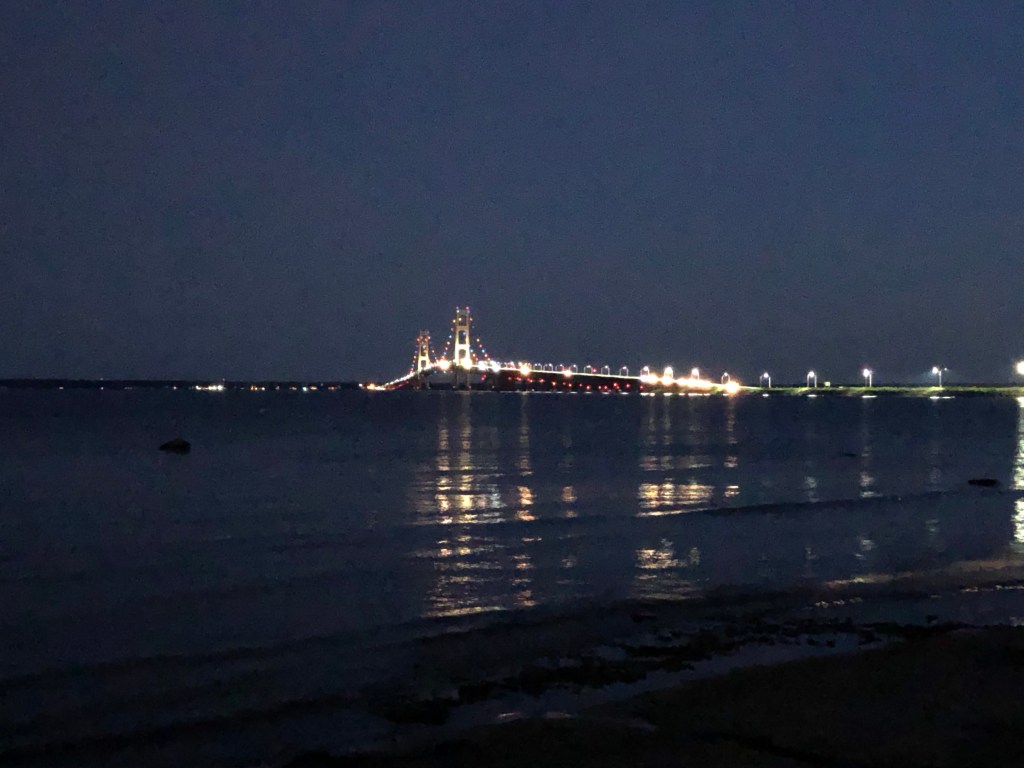
Picture of the Mackinac Bridge on the 4th of July

The morning of July 5th, waking up early in a campground is an experience. When my alarm went off, I wanted to close my eyes and try to get a little more sleep, but I got up instead.

Outside our camper, it was already warm—warmer than it had been the past few mornings. The campground was still and quiet. The sun lit up the remnants of the night before: toys, coolers, Fourth of July decorations scattered around every site, like snapshots of joy frozen in time. It made me smile.

But I had work to do.


Running Through Summer

I’ve never wanted to do a fall marathon because I don’t like doing the bulk of my training in the summer. I love running—but I also love summer and my family. Running all those miles often means missing out on both.

Plus, the heat has always been tough for me. I think I have a high sweat rate, and in warmer temps, I often finish my runs feeling drained, even sick. Still, I was determined to give this training cycle my best shot.

So I woke up even earlier to hydrate for my 11-miler. By the time I started running, my stomach was full of fluid—I felt it sloshing around, and I was a little nauseous. But I knew my body would thank me later.


Running with Friends Makes All the Difference

I ran the first 8 miles with one of my best friends. We’ve logged countless miles together—in high school, college, and beyond. We push each other in a good way.

There was a long hill on our way back, and if she hadn’t been there, I probably would have stopped to take a breather. Even after all that hydration, I was definitely feeling the effects of the heat.

After she finished her miles, I grabbed an electrolyte drink and guzzled 8 ounces, followed by a GU energy gel. I usually don’t take fuel unless I’m running 13+, but I’m learning that even on shorter long runs, it can help.

The last 3 miles I ran with her husband. That helped too. When I’m alone, it’s easy to get stuck in my own head and focus too much on discomfort. Having someone beside me, even just for accountability or pride, makes a difference.


Comebacks and Conviction

I finished all 11 miles. It was the longest I’ve run since January, when I was training for a spring marathon I never got to race due to proximal hamstring tendinopathy.

Was I tired? Yes. Dehydrated? For sure. But also proud. It felt good to complete a hard run and know a rest day was coming, followed by a lower-mileage week. I’ve used a “2 weeks hard, 1 week easy” structure for years—and it works for me.


“Running is my exercise true love—and I believe my body can still do it.”

Now that I’m over 40, I’ve had a few health professionals suggest I scale back—run fewer days, cross-train more, or even (gasp) switch to walking.

I know they mean well. But in the politest of terms: I don’t think so.

I like walking. I cross-train occasionally. I stretch and strength train and fuel wisely. But running is still what I love. And my body, even after injury, still shows up for it.


Why I Still Run

Completing that 11-miler, including a few legit hills, at a pace I once ran in my 20s? That’s a victory. It felt hard—but I did it.

Yes, I’m aging. We all are. But there are plenty of runners much older than I am still doing this—and doing it well. Why not me?

I talked about this with my friend’s husband during those last 3 miles. We’re trying to actually live the rest of our lives. And for me, that includes doing what I love—even when it’s hard.

Maybe especially when it’s hard.

Later that day, I pulled out my massage gun and worked on the same hamstring I injured back in January. It felt tight but okay. I stretched. I paid attention. I took care of myself—because I want to keep doing this for a long time.


Hard Things Are Worth It

Running is hard sometimes. Parenting is hard. Life is hard. But pushing through something physically hard helps me face the other hard things with more resilience.

And that’s why I’m still running.